If you have spent any time on TikTok, Pinterest, or beauty blogs, you have probably heard the term “glass skin.” It describes skin that looks smooth, hydrated, bright, and naturally radiant, almost as if it has a soft glow from within.
The reason it looks so reflective is usually not because the skin is literally perfect. It is simply well-hydrated, moisturized, and cared for consistently.
And I think this is important to remember because social media can make us feel like our skin is supposed to look completely smooth and airbrushed all the time. Real skin has pores, texture, fine lines, and the occasional breakout. That is completely normal.
So when we talk about glass skin, I would focus less on achieving “perfect” skin and more on creating skin that looks healthy, hydrated, and well cared for.
Here are 9 simple steps that can help you get closer to that fresh, naturally glowing look.
Pin it for later!
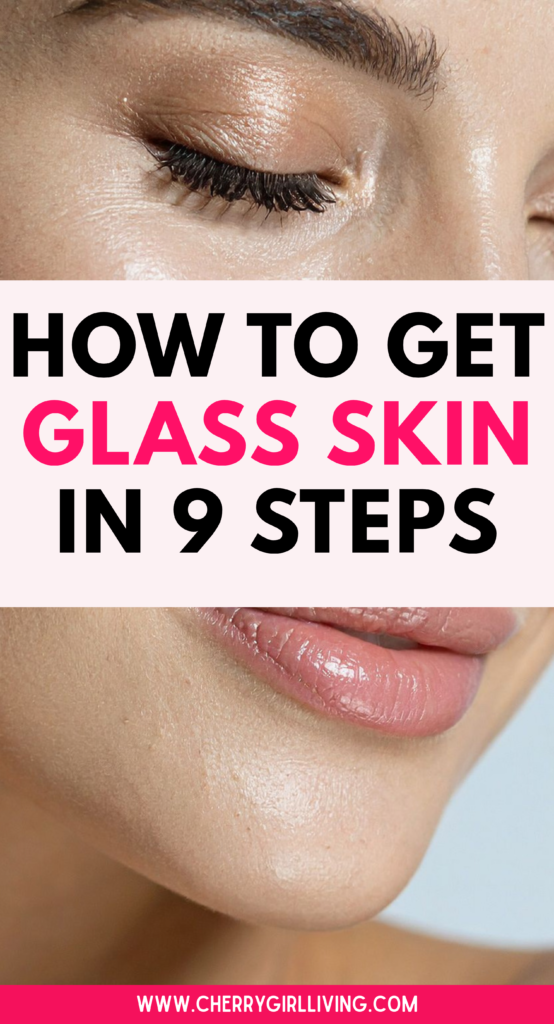
How to get glass skin in 9 steps
Step 1: Be Gentle With Your Skin
One of the easiest skincare mistakes to make is simply doing too much. Sometimes we assume that if a product makes our skin feel extra clean or tingly, it must be working, but that is not necessarily the case.
If your cleanser leaves your face feeling tight, dry, or uncomfortable afterward, it may be removing more than you need. Over time, this can leave your skin feeling irritated and looking dull.
Your face should feel clean after cleansing, but it should not feel like all the moisture has been stripped away.
A gentle cleanser and a simple routine are often a much better starting point. If you wear makeup or sunscreen every day, you may also prefer double cleansing in the evening to help remove everything thoroughly.
A few other things worth keeping in mind are:
- Use lukewarm rather than very hot water
- Avoid harsh scrubs
- Try not to wash your face excessively
- Give new products time before deciding whether they work for you
Most importantly, be patient with your skin. I think it is easy to get caught up in the idea that more products will automatically mean better results, when sometimes your skin actually needs a little less attention.
Step 2: Focus on Hydration
If there is one thing that makes a big difference when you are trying to achieve that fresh, dewy look, it is hydration.
When your skin is dehydrated, it can look dull, rough, flaky, or tired. Well-hydrated skin, on the other hand, tends to look softer, plumper, and naturally more radiant.
And yes, even oily skin needs moisture. I know it can feel counterintuitive to add moisturizer when your skin already looks shiny, but skipping it is not necessarily going to solve the problem.
The trick is finding hydrating products that feel comfortable for your particular skin type. Depending on what your skin needs, you might consider products such as:
- Hydrating toner
- Hyaluronic acid serum
- Lightweight moisturizer
- Essence
One simple trick is applying your moisturizer while your skin is still slightly damp. This can help your skin hold onto moisture and leave it feeling softer and more comfortable.
You can also support hydration by drinking enough water throughout the day. It is not a magic solution for glass skin, but staying hydrated is still an important part of taking care of yourself overall.
Step 3: Don’t Over-Exfoliate
Exfoliation can make your skin feel incredibly smooth, which is probably why it is so tempting to keep doing it. But when it comes to skincare, more is definitely not always better.
Exfoliating too often can irritate your skin barrier and leave your face feeling red, sensitive, or uncomfortable. And if your skin is already irritated, adding even more exfoliating products is probably not going to help.
For many people, exfoliating once or twice a week is enough, although what works best depends on your skin and the product you are using. Gentle chemical exfoliants can also be preferable to rough physical scrubs.
As a cosmetician myself, I would recommend to exfoliate every 2 weeks with a chemical peeling.
I use the one from Schrammek and I find it so good!
A few things I would keep in mind:
- More exfoliation does not automatically mean faster results
- If your skin burns or stings, take a step back
- Give your skin time to recover
- Keep the rest of your routine gentle
Your goal is to support your skin, not constantly challenge it. Sometimes the glow comes from doing a little less and giving your skin a chance to settle.
Step 4: Wear Sunscreen Every Day
If I had to choose one skincare habit that is worth making a priority, sunscreen would be very high on my list.
You can have the most carefully planned skincare routine in the world, but protecting your skin from the sun is still incredibly important. Regular sun exposure can contribute to things like dark spots, uneven skin tone, fine lines, and other signs of skin damage.
And yes, sunscreen is still worth considering on cloudy days because UV exposure does not disappear just because the sun is hiding behind the clouds.
The most important thing is finding a sunscreen that you actually enjoy using. If it feels extremely heavy, greasy, or uncomfortable, you may find yourself skipping it.
So rather than searching endlessly for the “perfect” sunscreen, find one that feels good on your skin and fits naturally into your everyday routine. Consistency is what matters most.
Step 5: Don’t Use Too Many Products at Once
If you have ever fallen down a skincare rabbit hole online, you know how easy it is to suddenly want ten different serums. There always seems to be another ingredient that promises brighter, smoother, younger-looking skin.
But introducing lots of products at the same time can make it difficult to know what your skin actually likes. It can also increase the chance of irritation, especially when you are combining strong active ingredients.
You really do not need a complicated routine to have healthy-looking skin.
Some ingredients that are commonly used in routines focused on hydration and glow include:
- Hyaluronic acid for hydration
- Niacinamide for supporting smoother-looking skin
- Vitamin C for a brighter-looking complexion
- Ceramides for supporting the skin barrier
The important thing is to introduce products gradually rather than changing everything at once. That way, you have a much better idea of what works for your skin.
And honestly, there is something quite nice about having a skincare routine that is simple enough that you actually enjoy doing it.
Step 6: Protect Your Skin Barrier
Your skin barrier is essentially your skin’s protective layer, and keeping it healthy is an important part of achieving that fresh, balanced look.
When your skin barrier is happy, your skin may feel comfortable, hydrated, and calm. When it becomes irritated or damaged, you might notice dryness, redness, sensitivity, or breakouts.
This is another reason why constantly adding new products or exfoliating too often can backfire.
To help support your skin barrier, try to:
- Avoid excessive exfoliation
- Keep your routine relatively simple
- Be careful with strong acids and active ingredients
- Choose gentle, hydrating products
- Give your skin time to recover when it becomes irritated
I think this is one of those skincare lessons that is easy to learn the hard way. Sometimes we become so focused on fixing one little skin concern that we accidentally create another one.
Healthy skin does not need to be constantly corrected. Sometimes it just needs consistency and a little patience.
Step 7: Sleep and Stress Affect Your Skin More Than You Think
Skincare products are fun, but your daily habits matter too.
Getting enough sleep gives your body time to rest and recover, while ongoing stress can affect how you feel both physically and emotionally. And unfortunately, your skin can sometimes show when you have been having a particularly stressful week.
You may notice things like puffiness, dull-looking skin, breakouts, or simply a tired appearance when you are not sleeping well or feeling overwhelmed.
That is why I would not focus entirely on what you are putting on your face. Taking care of yourself from the inside matters too.
A few simple habits that can help you take better care of yourself include:
- Aim for around 7–8 hours of sleep
- Change your pillowcase regularly
- Drink enough water
- Avoid touching your face unnecessarily
- Take breaks when you are feeling stressed
You do not have to completely eliminate stress from your life — realistically, none of us can. But finding little ways to rest and recharge can make a difference in how you feel, and that is always worth prioritizing.
Step 8: Eat Foods That Support Healthy Skin
Your skincare routine is only one part of the picture. What you eat can also contribute to your overall health, which is why a balanced diet is worth paying attention to.
You do not need to follow a strict “glowing skin diet” or completely cut out your favorite foods. Instead, try to make nourishing foods a regular part of your meals.
Foods containing vitamins, antioxidants, healthy fats, and other nutrients can support your overall well-being. Some options include:
- Fruits
- Leafy greens
- Nuts and seeds
- Salmon
- Avocados
- Cucumbers
- Watermelon
And please do not feel like you need to be perfect with your diet. I think it is much more realistic to enjoy your favorite treats while also making sure you are giving your body plenty of nutritious foods.
The goal is not perfection. It is simply creating eating habits that make you feel good and support your health over time.
Step 9: Be Consistent and Stop Chasing Overnight Results
If there is one thing I would really want you to remember from this entire post, it is this: good skin takes time.
It can be frustrating when you try a new product and do not wake up the next morning looking completely different. But healthy-looking skin is usually the result of consistent habits rather than one miracle product.
You do not need luxury skincare, every viral TikTok product, or a complicated 12-step routine. A simple routine that you actually follow is often much more realistic.
Try to give your skin time to adjust and pay attention to gradual improvements rather than expecting overnight results.
And please try not to compare your skin to heavily filtered photos online. Real skin is supposed to have texture. Pores are normal, and the occasional breakout does not mean that your skincare routine has failed.
Your skin does not need to look perfect to look beautiful.
A Simple Glass Skin Routine for Beginners
If skincare feels overwhelming, I would start with the basics rather than trying to copy an elaborate routine you saw online.
A simple routine could look something like this:
Morning Routine
- Gentle cleanser
- Hydrating toner
- Vitamin C or niacinamide serum
- Moisturizer
- Sunscreen
Night Routine
- Gentle cleanser
- Hydrating serum
- Moisturizer
- Exfoliant 1–2 times a week
That is honestly a perfectly reasonable place to start.
You can always add or adjust products later depending on what your skin actually needs. There is no reason to introduce ten new products just because someone online has them sitting beautifully on their bathroom shelf.
Common Mistakes to Avoid
Sometimes achieving healthier-looking skin is less about adding another product and more about stopping a few habits that may be irritating your skin.
Try to avoid:
- Over-exfoliating
- Skipping sunscreen
- Using too many products at once
- Picking at your skin
- Constantly changing your routine
- Following every skincare trend you see online
Your skin usually prefers consistency over chaos.
How Long Does It Take to Get Glass Skin?
I want to be realistic about this because skincare can easily create unrealistic expectations.
You probably will not wake up tomorrow with perfectly smooth, reflective skin, and that is completely okay. Everyone’s skin is different, and how quickly you see changes depends on your skin, your routine, and what you are trying to improve.
You might notice improvements such as better hydration relatively quickly, while changes in texture and overall radiance can take longer.
The important thing is to look at your skin over time rather than judging your progress from one day to the next. Small improvements can add up when you give your routine enough time.
Final Thoughts
If there is one thing I want you to take away from this post, it is that glowing skin is much more about consistency than perfection.
You do not need expensive products, flawless skin, or a complicated routine to have a healthy-looking glow. Focus on the basics: keep your skin hydrated, wear sunscreen, be gentle with your skin, get enough rest, eat nourishing foods, and give your routine time to work.
And most importantly, be kind to your skin.
Real skin has pores, texture, and imperfect days. The goal is not to make your skin look airbrushed. It is to take care of it so that it feels healthy, comfortable, and naturally radiant.
Sometimes, the best glow up is simply learning to take care of yourself without constantly trying to “fix” yourself.



Leave a Reply